
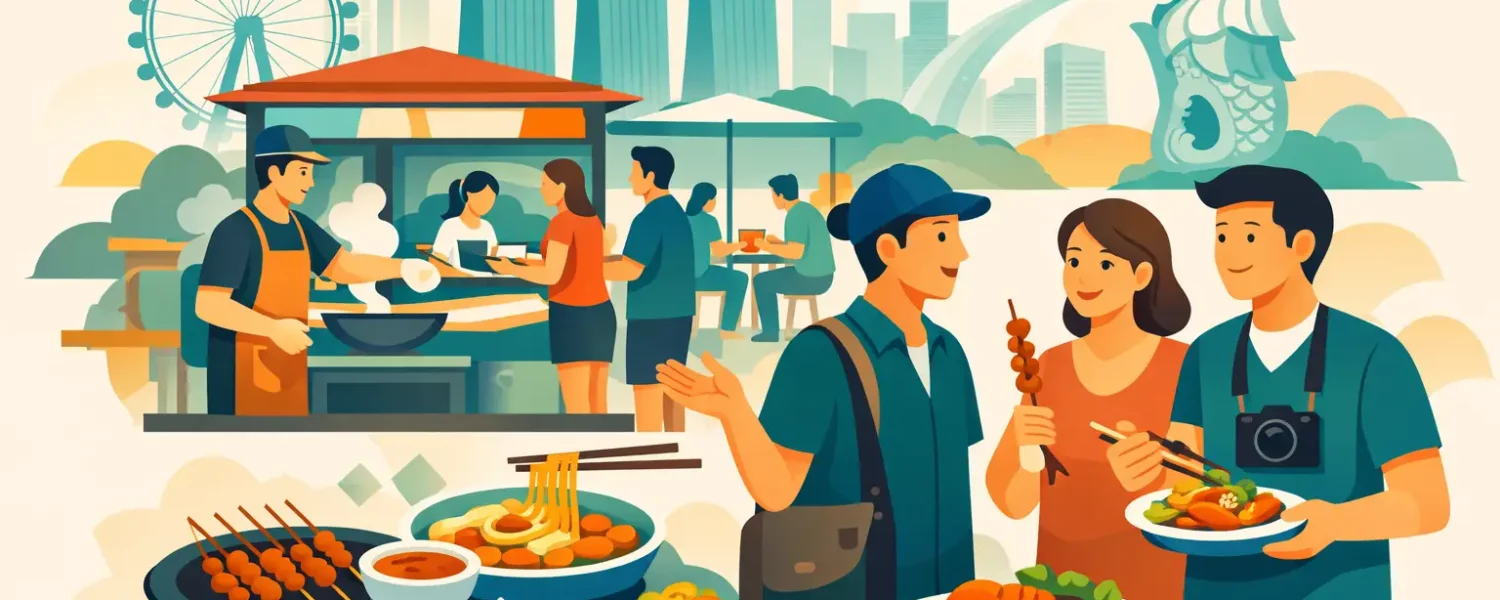
A plate of chicken rice can be lunch. Or it can be a story about migration, adaptation, family recipes, and the everyday rhythm of a city that takes food very seriously. That is the real appeal of a guided hawker tasting experience Singapore visitors and locals remember long after the last spoonful of cendol.
If you have ever walked through a hawker center and felt spoiled for choice, a little overwhelmed, or unsure what to order first, you are not alone. Hawker culture is one of Singapore’s great joys, but it can also be a lot to take in all at once. Stalls compete for attention, menus can feel unfamiliar, and the best dishes are often tied to histories you would never guess just by looking at a bowl of laksa or a stack of prata. A guided experience turns that busy, delicious maze into something more meaningful and much more fun.
What makes a guided hawker tasting experience in Singapore worth it
The short answer is curation. The better answer is context.
Anyone can walk into a hawker center and order satay, nasi lemak, or sugarcane juice. But without a bit of guidance, you are really only tasting the food. You miss the layers that make hawker culture special – the blend of Chinese, Malay, Indian, Peranakan, and other influences that shaped what Singaporeans eat and how they eat it.
A good guide helps you notice the details. Why is one laksa richer and creamier while another leans spicier? Why does chicken rice, which looks so simple, inspire such strong opinions? Why do locals talk about wok hei, sambal, broth, texture, and stall legacy like they are discussing fine art? Because in a way, they are.
That is where a guided tasting shines. It gives structure to the experience without making it stiff. You still get the energy of the hawker center – the clatter of trays, the call of drink orders, the aroma of grilled skewers – but with someone there to connect the dots.
More than a meal, less intimidating than going solo
For first-time visitors, hawker centers can be thrilling and confusing in equal measure. The atmosphere is lively, the choices are endless, and the social cues are not always obvious. Do you reserve your seat first? Which stall is worth the queue? How much should you order if you want to try six things and still have room for dessert?
A guided hawker tasting experience in Singapore solves those practical questions quickly. You spend less time wondering and more time enjoying. That matters, especially if your schedule is tight and you want one outing that combines food, culture, and a real feel for local life.
For locals, the value is a little different. A guided format can help you revisit familiar dishes with fresh eyes. Maybe you have eaten prata all your life, but never heard the fuller story of how Indian Muslim food traditions became woven into Singapore’s everyday supper culture. Maybe you know cendol as a cooling dessert, but not how regional ingredients and community tastes shaped the versions people love today. Familiar food becomes newly vivid when someone frames it well.
The dishes are iconic, but the stories are the real flavor
The best guided tastings do not rush from bite to bite like a checklist. They let each dish carry some weight.
Satay is not just grilled meat on skewers. It is smoke, spice, peanut sauce, and the communal pleasure of eating with your hands and chatting between bites. Laksa is not just noodle soup. It is richness, heat, and a perfect example of how blended culinary traditions can create something deeply local. Nasi lemak brings fragrance from coconut rice, heat from sambal, crunch from anchovies and peanuts, and a balance that feels simple until you realize how precise it is.
Then there is chicken rice, possibly one of the most misunderstood dishes for outsiders because it looks so modest. But the poached chicken, seasoned rice, chili, ginger, and dark soy each matter. The beauty is in restraint. A guide can explain why locals care so much about texture, aroma, and stock, which turns a seemingly plain plate into a lesson in skill.
Desserts and snacks matter too. Cendol cools you down while showing off the region’s love of layered textures. Prata, especially when eaten fresh and hot, is a small marvel of technique. Crispy at the edges, chewy at the center, and made to be dipped, torn, and shared, it carries both comfort and craft.
Why guided tastings work so well for groups
Food is one of the easiest ways to bring people together, but not every dining format does that equally well. A hawker tasting works because it is naturally social. Dishes are varied, portions can be shared, and everyone gets something to talk about right away.
For families, that means less pressure to commit to one cuisine or one big meal. Kids can try a bite of satay, adults can compare favorite sauces, and everyone gets a few entry points into local culture without feeling like they are in a classroom.
For corporate groups and hosted delegates, the format is especially useful. It feels distinctly local, it encourages conversation, and it gives guests a much stronger sense of place than another hotel lunch ever could. There is also a nice balance of informality and curation. People relax, but the experience still feels thoughtfully organized.
That is one reason heritage-led food experiences have become such a strong choice for team outings and visiting clients. They are memorable without being gimmicky.
A guided hawker tasting experience Singapore travelers should choose carefully
Not every food tour is created equal. Some are heavy on volume and light on meaning. Others try to fit in too much and end up feeling rushed.
A strong experience usually gets three things right. First, the pacing feels comfortable. You should have time to eat, listen, ask questions, and actually notice what is happening around you. Second, the food selection should feel balanced. Too many heavy dishes can blur together, while a thoughtful lineup creates contrast – spicy next to cooling, grilled next to soupy, rich next to refreshing. Third, the storytelling should be clear and grounded. You do not need a lecture, but you do want more than trivia.
It also helps when the experience is approachable. Hawker food should feel joyful, not exclusive. If you are a serious foodie, great. If you are simply curious and hungry, also great. The right guide meets both kinds of guests where they are.
What you can expect from a well-curated experience
At its best, a guided tasting feels like being shown around by someone who genuinely wants you to fall in love with hawker culture. You are not just pointed toward popular dishes. You are given a way to understand them.
Expect sensory details. The scent of charcoal from satay. The sheen of curry on a piece of prata. The first spoonful of laksa, where spice and coconut arrive together. Expect little bits of etiquette and local know-how too, because those details help you feel more at ease in the space.
You should also expect a sense of place. Hawker culture is not separate from daily life here. It reflects working routines, family habits, neighborhood identities, and the practical genius of a food culture that values quality, affordability, and variety all at once. That is a rare thing, and worth appreciating properly.
Brands like J.I.A.K 99 build on that idea by making the experience both accessible and rooted in heritage. The food is the draw, of course, but the real magic is how a casual meal becomes a cultural memory.
Come hungry, but come curious too
There is no single perfect way to eat through a hawker center. Going solo can be spontaneous and exciting. But if you want to understand what is on the plate, why it matters, and how the flavors connect to the larger story of Singapore, a guided format gives you more.
It gives you confidence if you are new, fresh perspective if you are local, and a better chance of tasting the dishes in a sequence that actually makes sense. Most of all, it gives you something that a random meal cannot always offer – connection.
So yes, come for the chicken rice, the laksa, the satay, the prata, and the cendol. Come ready to jiak. But leave a little room for the stories too. They are often the part you carry home with you.