
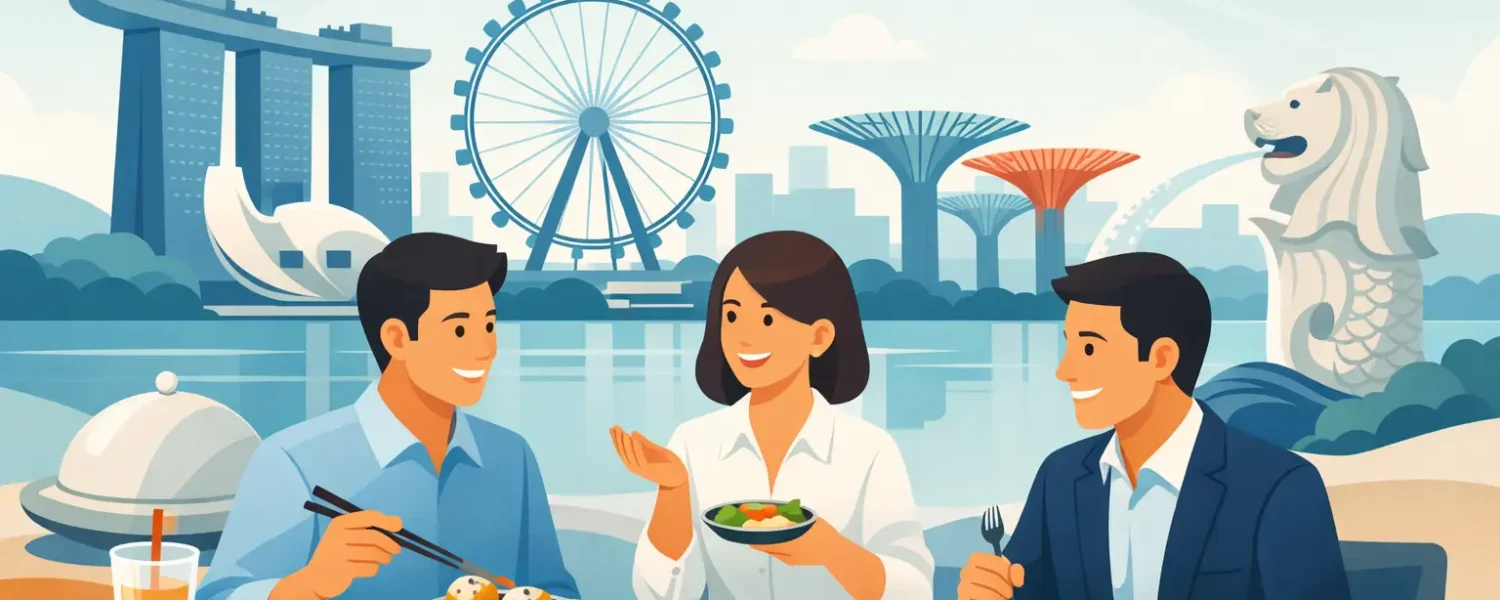
A corporate food experience guide should begin with one simple question: will your guests remember only what they ate, or also what they learned, laughed about, and shared around the table? For teams, clients, and visiting delegates, a meal can be far more than a slot between meetings. In Singapore, it can become a lively introduction to the people, migrations, traditions, and flavors that shape the city.
That difference matters. A standard restaurant lunch is easy to arrange, but a thoughtfully curated food experience gives people something to talk about after the plates are cleared. It creates common ground between colleagues who have just met, rewards a team without feeling formulaic, and gives international guests a genuine taste of local life. The best part? Nobody needs to be a food expert. They simply need to come ready to jiak.
Why food works for corporate connection
Corporate gatherings can be awkward when they rely too heavily on icebreakers, presentations, or a rigid agenda. Food offers a friendlier entry point. People naturally compare flavors, share recommendations, ask questions, and tell stories from home. A spoonful of laksa may lead to a conversation about spice preferences. A plate of chicken rice can prompt a debate over chili, rice, or sauce. Suddenly, the room has warmed up.
Hawker food is particularly suited to this kind of connection because it is made for variety and sharing. Singapore’s food culture reflects Chinese, Malay, Indian, Peranakan, and other communities, each contributing ingredients, techniques, and traditions. When a group experiences these dishes with context, the meal becomes a window into a multicultural nation rather than a checklist of famous foods.
For organizations hosting overseas delegates, this is also a thoughtful alternative to a generic welcome dinner. It says: we want you to see the Singapore we know and love, not just the view from a boardroom.
Corporate food experience guide: start with the purpose
Before choosing a menu or venue, decide what the gathering needs to accomplish. The right format depends on the people in the room and the feeling you want to create.
A client appreciation event may call for a relaxed, polished experience with enough structure to keep conversation flowing. A team-building session may benefit from hands-on activities, small-group challenges, and plenty of chances to collaborate. A delegate program may need cultural storytelling that makes local food approachable for first-time visitors. For a team celebrating a milestone, the priority might simply be joyful abundance and time together.
Being clear about the purpose helps avoid a common mistake: trying to make one event do everything. A food tour with several stops can be brilliant for energetic groups who want to explore. A seated corporate lunch may suit a tighter schedule or senior guests. A workshop adds participation but requires more time and willingness to get involved. There is no single best choice – only the best fit for your group.
Think about your guests before the dishes
A memorable experience feels considerate from the first invitation. Ask about dietary needs early, including vegetarian, halal, allergy, and spice preferences. Singaporean food is wonderfully diverse, but some iconic dishes use ingredients that may not work for every guest. Good planning means everyone can participate meaningfully, not watch from the sidelines.
Also consider familiarity. Local colleagues may know nasi lemak and prata well, while international guests may be trying them for the first time. That mix is not a problem. It is an opportunity. Invite locals to share their favorite way to eat a dish, while a guide can explain the history and cultural cues without turning lunch into a lecture.
Group size shapes the atmosphere, too. Smaller groups can linger over conversations and questions. Larger groups need clear pacing, easy movement, and a host who can keep the energy bright without rushing everyone through the experience.
Build a menu that tells a Singapore story
The strongest corporate food experiences do not chase novelty for its own sake. They choose dishes with contrast, character, and a story worth hearing.
Start with crowd-friendly icons that offer different textures and flavor profiles. Satay brings smoky char, peanut sauce, and the fun of eating from a skewer. Laksa delivers rich coconut fragrance and a little heat. Nasi lemak balances aromatic rice with spicy sambal and savory sides. Chicken rice shows how something that looks simple can be deeply precise, from the fragrant rice to the ginger and chili sauces.
Then make room for a sweet finish. Cendol, with its coconut milk, palm sugar, and green jelly strands, is cooling and cheerful after savory dishes. Freshly made prata adds theater as well as taste, especially when guests can watch the dough stretched, flipped, and cooked until crisp at the edges.
Variety is useful, but too many dishes can turn the experience into a rushed tasting. Choose enough food for guests to feel satisfied, then leave time to enjoy each stop or course. The goal is not to collect the most photos of plates. It is to give each flavor a place in the story.
Let the stories do some of the hosting
A dish becomes more memorable when guests understand where it came from and why it matters. Hawker culture is full of stories about migration, family recipes, neighborhood communities, early-morning preparation, and skills passed down across generations.
This is where a guided format earns its place. Instead of handing guests a menu and hoping they choose well, a host can introduce the dishes, explain key ingredients, and offer useful etiquette. Guests learn why sambal comes in so many versions, what makes a good bowl of laksa, or why the humble kopi order has its own language and rhythm.
Keep the storytelling light, vivid, and conversational. People should feel invited into the culture, not tested on it. A good guide knows when to share a detail, when to let a dish speak for itself, and when to make room for a guest’s own food memory.
Make room for participation, not just consumption
The difference between a meal and an experience often comes down to participation. People remember what they did together.
For team-building events, consider a food challenge that asks small groups to identify ingredients, match dishes to cultural influences, or create their own ideal hawker order. A hands-on workshop can bring out unexpected personalities as colleagues cook, fold, mix, or taste together. These activities work especially well when the group includes people from different departments who do not normally interact.
For client and delegate events, participation can be gentler. Ask guests to vote for their favorite dish, share a first impression, or try ordering a local drink. A simple tasting prompt such as “What flavor stands out first?” can spark conversation without putting anyone on the spot.
The key is to keep the activity connected to the food. Forced games can make a polished gathering feel childish. A well-designed food moment, on the other hand, gives people a natural reason to engage.
Plan the practical details that protect the fun
Warm hospitality depends on quiet preparation. Confirm timing, meeting points, transportation needs, weather plans, and the physical comfort of your guests. Singapore’s heat and sudden rain are part of the island’s personality, but they should not become the main memory of the day.
If the event is between meetings, be realistic about travel time and how long the group needs to settle in. For a lunch program, allow enough space for introductions, tasting, storytelling, and a relaxed finish. If senior leaders or international guests are attending, give them a clear outline in advance so they know what to expect, including walking distance and dietary arrangements.
Photography is worth considering, especially for incentive groups and visiting delegates. Hawker food is colorful, hands-on, and naturally shareable. Still, avoid letting phones take over. Build in a few photo-friendly moments, then bring attention back to the people and the plate.
A hosted experience such as J.I.A.K 99’s Classic Hawker Experience can make these details easier to manage by bringing the food, cultural context, and group flow into one joyful program.
Measure what people felt, not just attendance
After the event, do more than count heads or calculate cost per person. Ask whether people connected. Did guests try something new? Did colleagues from different teams spend time together? Did visiting clients leave with a story they could retell?
A short follow-up message can capture these reactions while the flavors are still fresh. Encourage guests to name their favorite dish or one surprising thing they learned. Their answers reveal whether the experience landed, and they often become the best proof that the event was worth repeating.
The most successful corporate food gatherings do not feel like another calendar commitment. They leave people with a fuller stomach, a warmer sense of belonging, and a reason to look at Singapore’s everyday food with fresh eyes. Give your guests a table with a story behind it, then let them come jiak together.