
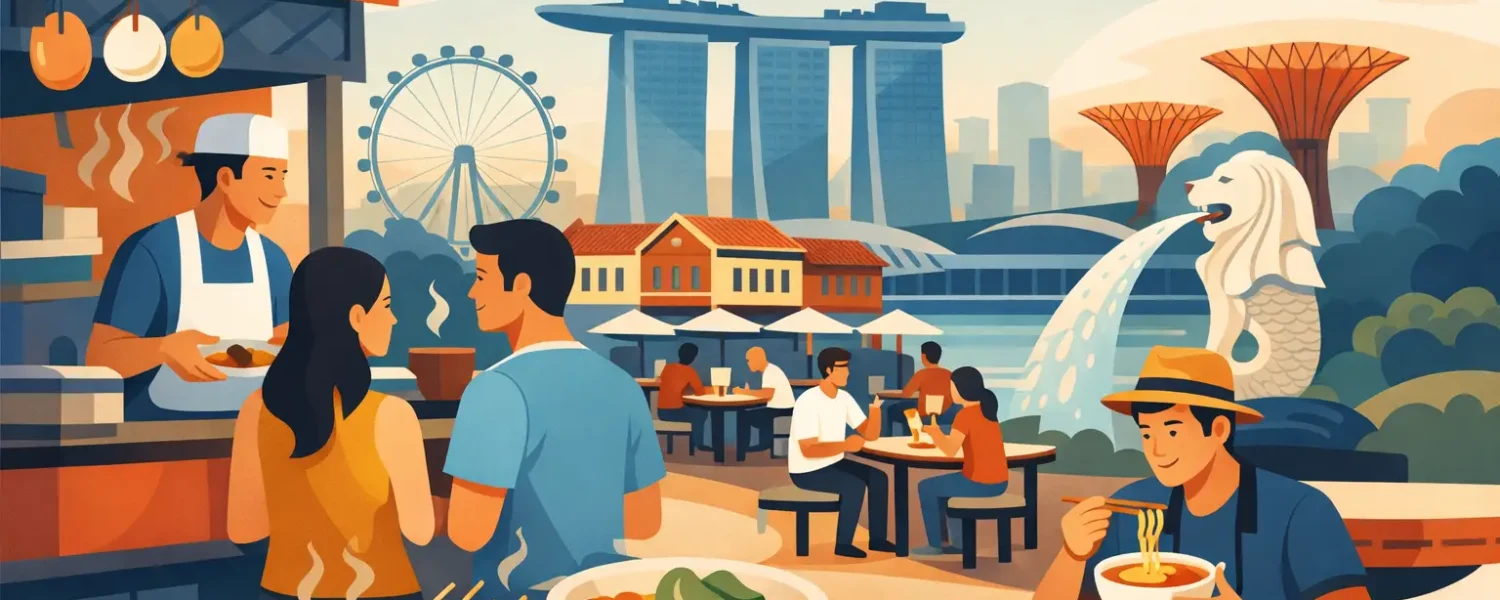
A plate of chicken rice can look wonderfully simple: tender poached chicken, fragrant rice, chili, dark soy sauce, and a bowl of clear soup. But for food tourism Singapore, the real flavor begins before the first bite. It lives in the family recipes, the early-morning prep, the languages called across a hawker center, and the communities that turned everyday meals into a national treasure.
Singapore is often experienced at a fast pace. Visitors move from skyline views to shopping streets, gardens, museums, and waterfront landmarks. Hawker food asks you to slow down. Pull up a chair, notice the scent of grilled satay in the air, watch a prata being flipped on the griddle, and taste how many cultures can meet on one table.
Why Food Tourism in Singapore Starts at the Hawker Center
A hawker center is not simply a food court. It is a living meeting place where generations of Singaporeans have gathered for breakfast, lunch, supper, celebrations, and the small daily ritual of deciding what to jiak.
The choices tell a story of migration and adaptation. Chinese, Malay, Indian, Peranakan, and Eurasian influences have shaped the dishes people know and love today. Recipes traveled with communities, changed according to available ingredients, and became distinctly Singaporean over time. That is why laksa is more than a coconut-rich noodle soup, and nasi lemak is more than rice cooked in coconut milk. Each dish carries a thread of heritage.
For travelers, this makes hawker food one of the most approachable ways to understand the country. You do not need to know every cuisine or speak every local language. You only need curiosity, an appetite, and a willingness to try a little more than the familiar.
The Dishes That Make a Hawker Adventure Memorable
A great tasting experience should have range. Start with something smoky, move into something comforting, add spice or crunch, then leave room for a cool, sweet finish. Singapore’s classic dishes make that easy.
Satay: Smoke, Spice, and Sharing
Satay brings people together before anyone has properly settled into their seat. Skewers of grilled meat arrive with a gentle char, served alongside a rich peanut sauce, cucumber, and ketupat rice cakes. The scent alone feels festive.
Its roots stretch across the Malay Archipelago, while its place in Singapore reflects the island’s long history as a crossroads for people, trade, and food traditions. Satay is best shared, because it creates the most important part of a good meal: conversation.
Laksa: A Bowl with Many Layers
Laksa is bold, creamy, aromatic, and deeply comforting. Depending on the style, you may find rice noodles in a spicy coconut gravy with shrimp, fish cake, tofu puffs, and a spoonful of sambal for extra heat.
It is also a delicious example of how food resists neat labels. Laksa is closely connected to Peranakan culinary traditions, where Chinese and Malay influences came together in distinctive ways. One bowl can lead to a bigger conversation about identity, home cooking, and the creativity that happens when cultures live side by side.
Nasi Lemak and Chicken Rice: Everyday Icons
Nasi lemak is a breakfast favorite that happily belongs at any hour. The coconut rice is fragrant and soft, paired with sambal, egg, ikan bilis, peanuts, and often a choice of fried chicken, fish, or other savory accompaniments. The balance matters: creamy rice, sweet-spicy sambal, salty crunch, and satisfying richness.
Chicken rice has an equally devoted following. Its beauty is in precision. The rice should be glossy and flavorful from chicken stock and aromatics. The chicken should be tender. The sauces should bring heat, ginger, and savory depth without overwhelming the dish. Locals may have strong opinions about their preferred stall, and that passion is part of the experience.
Prata and Cendol: The Joy of Contrast
Watching roti prata being made is half the fun. Dough is stretched, tossed, folded, and cooked until crisp at the edges and soft within. It can be enjoyed plain with curry, stuffed with egg or cheese, or turned sweet with sugar and banana. It is hands-on food, made for tearing, dipping, and sharing.
Then comes cendol, a cheerful finish for Singapore’s warm weather. Shaved ice, coconut milk, palm sugar syrup, and green jelly strands create a dessert that is cool, creamy, and gently caramel-like. After chili, curry, and grilled meats, that first spoonful feels like a reset.
How to Eat Like a Curious Visitor, Not a Checklist Chaser
It is tempting to treat food tourism as a mission to collect famous dishes. There is nothing wrong with having a must-eat list, especially if time is short. But the most memorable food experiences rarely come from racing through ten stalls in one afternoon.
Choose a few dishes and give them attention. Ask what makes the sambal different. Notice whether the laksa is more coconut-forward or more fiery. Compare the crunch of one prata with another. If you are traveling with friends, order different items and share. Hawker dining rewards a communal table.
Timing makes a difference, too. Some stalls sell out early because they prepare a limited quantity each day. Others come alive at night, when the after-work crowd arrives for supper. A popular queue can be a helpful signal, but it is not the only measure of a meaningful meal. Sometimes the best discovery is a modest stall with a specialty dish made by someone who has been perfecting it for decades.
There are practical trade-offs. Hawker centers can be busy, warm, and lively. Seating may be shared, and a favorite dish may not be available at the exact moment you want it. That is part of the rhythm. Come with flexible expectations and you will find more room for surprise.
Make the Stories Part of the Taste
Food tastes different when you understand where it comes from. A guided hawker experience adds context that a menu board cannot always provide: why certain spices became staples, how neighborhoods changed, what makes a dish a point of pride, and why locals can debate chicken rice with extraordinary seriousness.
This is especially valuable for first-time visitors, families, corporate groups, and delegates with limited time. Rather than guessing what to order or settling for the most familiar option, you can taste with confidence and hear the cultural stories behind each plate.
A Classic Hawker Experience with J.I.A.K 99 brings these details together through storytelling, sensory exploration, and tastings of Singapore favorites. It is designed for people who want more than a quick meal – they want to understand what they are eating, meet the spirit of the hawker tradition, and leave with stories worth retelling.
A Few Courtesies That Go a Long Way
Hawker culture is welcoming, but a little awareness helps everyone enjoy the space. Look around before taking a seat, as tables may be reserved with small personal items during busy periods. Return trays and dishes when you are done. Be patient in line, especially at stalls where food is cooked to order.
If you have dietary needs, ask clearly and kindly. Many dishes contain seafood, meat, eggs, dairy, peanuts, or spice, and preparation areas can be compact. Vegetarian, halal-friendly, and lighter options are often available, but choices vary by stall. A knowledgeable guide can be particularly helpful when you are navigating preferences across a group.
Most of all, do not be shy about trying something new. You may find that a dish you had never heard of becomes the flavor you remember most clearly from your trip.
The next time you sit down with a tray of hawker favorites, take a moment before you eat. Listen to the clatter of plates, breathe in the grill smoke and coconut fragrance, and let the table tell its story. Then come jiak – Singapore is ready to share.