
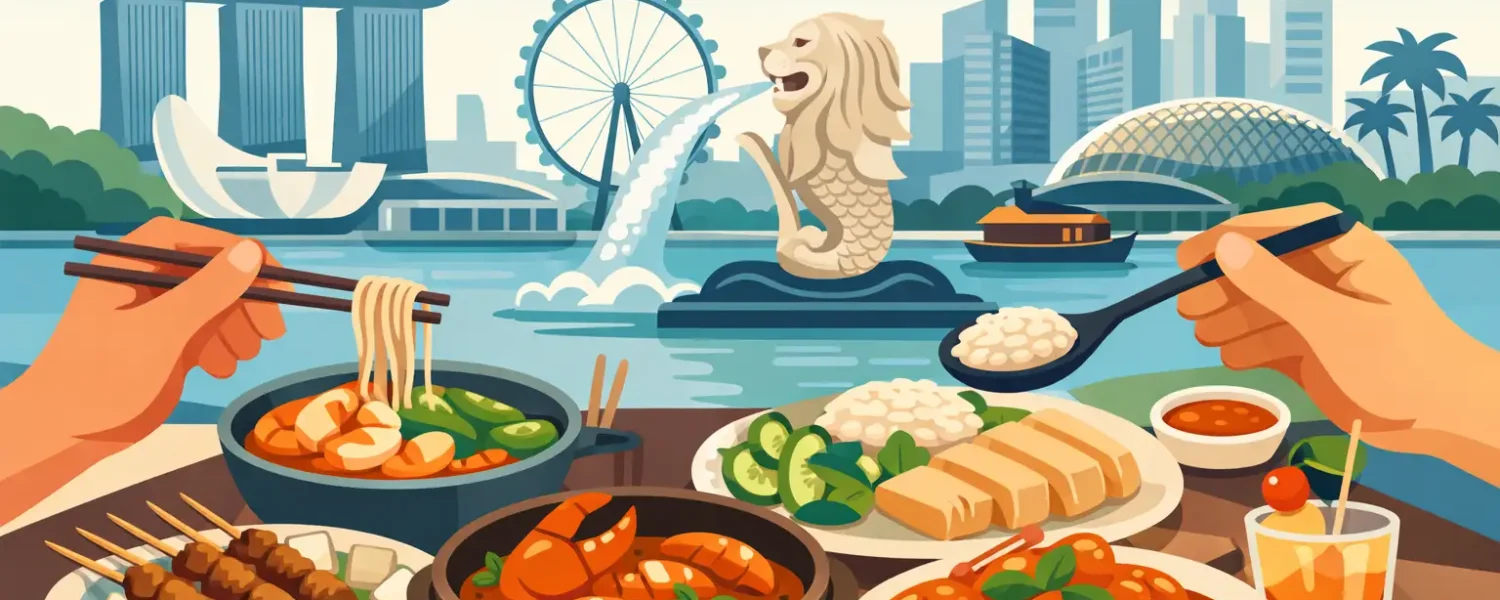
A plate of chicken rice can look almost too simple: pale poached chicken, glossy rice, a small dish of chili. But one bite tells a much bigger Singapore story. The chicken should be tender, the rice savory with chicken fat and stock, and the chili bright enough to wake up every flavor. That is the heart of how to taste Singapore classics: not rushing through a checklist, but noticing the craft, memories, and cultures gathered in each dish.
Singapore hawker food is delicious because it is layered. Chinese, Malay, Indian, Peranakan, and other communities have shaped the flavors found at one busy food center. Come hungry, share generously, and give each classic a moment to speak for itself.
How to Taste Singapore Classics With All Your Senses
Start by looking before you eat. A good hawker dish often announces itself through color and texture: the burnished char on satay, the orange-red sheen of laksa gravy, the crisp, blistered edges of prata. Then take in the aroma. Coconut milk, toasted spice, smoky grill fire, pandan, and fried shallots are not background details. They are part of the experience.
Taste in small, thoughtful bites first. Ask yourself where the richness sits, what brings freshness, and whether the heat arrives immediately or builds slowly. Hawker food is rarely about one dramatic flavor. It is about balance: creamy against spicy, sweet against salty, crisp against soft.
If you are visiting with friends, order a few dishes for the table. Sharing lets everyone taste more without turning lunch into a personal endurance test. It also reflects the communal spirit that makes a hawker meal feel like more than a quick stop between attractions.
Follow the right order, but keep it flexible
There is no strict rulebook, and appetite matters. Still, beginning with lighter or cleaner flavors helps your palate notice more. Chicken rice or nasi lemak can be a lovely starting point, followed by richer laksa or smoky satay. Save cendol for the end, when its cold sweetness feels especially satisfying.
Prata is the happy exception. It works at breakfast, supper, or whenever the smell of fresh dough on a hot griddle catches you. Eat it right away while the surface is crisp and the center is tender.
Meet the Hawker Classics One Bite at a Time
Hainanese chicken rice: taste the trio
Do not judge chicken rice by the chicken alone. The real pleasure comes from tasting the trio together: chicken, fragrant rice, and chili. Try a bite of chicken first to notice its silky texture and clean flavor. Then taste the rice, which should carry its own savory depth. Finally, add chili, ginger, or dark soy sauce according to your preference.
The dish has roots in Hainanese cooking, adapted over generations in Singapore. That evolution is part of the joy. A familiar-looking plate becomes a lesson in migration, adaptation, and precision.
Laksa: notice the richness and the lift
Laksa is a bowl with presence. Its coconut-based gravy is often rich, spicy, and fragrant with dried shrimp, herbs, and spice. Rice noodles and toppings such as fish cake, cockles, or tofu puff give it different textures, while the tofu puff absorbs the gravy like a flavor-packed sponge.
Take a sip of the broth before mixing too much. Then add a little sambal if you want more heat. Some bowls lean creamier; others are punchier and more seafood-forward. Neither style is automatically better. The point is to notice how each stall expresses a beloved classic.
Satay: look for smoke, spice, and sauce
Satay is the sound and scent of a grill at work. Skewered meat is marinated, grilled over flame, and served with a peanut sauce that may be sweet, spicy, chunky, or silky. The best first bite includes a little meat, sauce, cucumber, and compressed rice cake, known as ketupat.
The char matters. It brings a gentle bitterness that keeps the sweet peanut sauce from becoming too heavy. Satay carries Malay and Indonesian culinary influences, and it is made for conversation. Order a few skewers, pass them around, and let the grill do its magic.
Nasi lemak: build your own perfect bite
At its core, nasi lemak is coconut rice, but the supporting cast makes every mouthful different. You may find crunchy anchovies, roasted peanuts, egg, cucumber, sambal, and a choice of fried chicken, fish, or other accompaniments.
Try each component separately, then combine them. The coconut rice is gentle and aromatic; sambal brings sweet, savory heat; anchovies supply salt and crunch. If you are new to spice, begin with a small amount of sambal. You can always add more, but you cannot ask the rice to put out a fire.
Roti prata: chase the contrast
Watching prata being stretched, flipped, and folded is half the fun. The finished flatbread should have contrast: crackly, browned layers outside and a soft, chewy center. Tear it by hand and dip lightly into curry first. A heavy soak can hide the texture that makes prata special.
Plain prata lets you appreciate the dough and griddle work. Egg, cheese, onion, or other additions make it heartier. Sweet versions have their place too, especially for families, but a classic curry dip is a fine introduction to the savory side of this South Indian-influenced favorite.
Cendol: slow down for dessert
After spice and smoke, cendol arrives like a cool breeze. This icy dessert commonly brings together coconut milk, palm sugar syrup, green jelly noodles, and shaved ice. Stir gently enough to distribute the syrup, but do not turn it into a completely uniform drink. Part of the pleasure is getting a little more palm sugar in one spoonful and a little more coconut in the next.
Palm sugar has a deep, caramel-like character, not just plain sweetness. Let it linger. Dessert is where a hawker feast can become a memory.
Let the Story Change the Flavor
A dish tastes different when you know why it is on the table. Hawker culture grew from everyday cooks feeding communities, often with recipes carried across seas and adjusted to local ingredients, local tastes, and local rhythms. A bowl of noodles or a grilled skewer is not frozen in time. It is living heritage, made daily by people who have learned exactly when a broth is ready, when a grill is hot enough, and when a sauce needs one more pinch of something.
That is why asking a simple question can add so much to a meal. What is the signature dish here? Is the sambal spicy? How should this be eaten? Be respectful when stalls are busy, and keep questions brief. A friendly exchange can reveal a recommendation you would never have found on a generic food list.
For visitors who want the stories alongside the tasting, a guided experience can make the first hawker meal feel far less intimidating. J.I.A.K 99 brings iconic dishes, cultural context, and a little local cheer together, so you can come jiak with confidence.
A Few Hawker Habits That Make the Experience Better
Go with an open mind, but do not order everything at once. Rich dishes can blur together when eaten back-to-back, and a smaller, well-paced spread is more enjoyable than a table full of cooling food. If there are four or more people, sharing chicken rice, laksa, satay, nasi lemak, and cendol gives everyone a satisfying cross-section without too much repetition.
Heat tolerance is personal. Singapore classics can be wonderfully spicy, but spice should add excitement, not panic. Taste sambal or chili in small amounts and build from there. Keep a drink nearby, though water is usually more helpful than a sugary beverage when the heat rises.
Respect the pace of the hawker center. Find a seat when needed, return trays where expected, and be patient during peak hours. These small habits help preserve the easy, communal rhythm that makes the experience special.
Most of all, resist the urge to rate every bite before you have finished it. Some flavors need a second taste. Some dishes win you over through texture rather than instant drama. Let the chicken rice chili surprise you, let the laksa linger, and let the last spoonful of cendol remind you that Singapore’s best food stories are meant to be shared.