
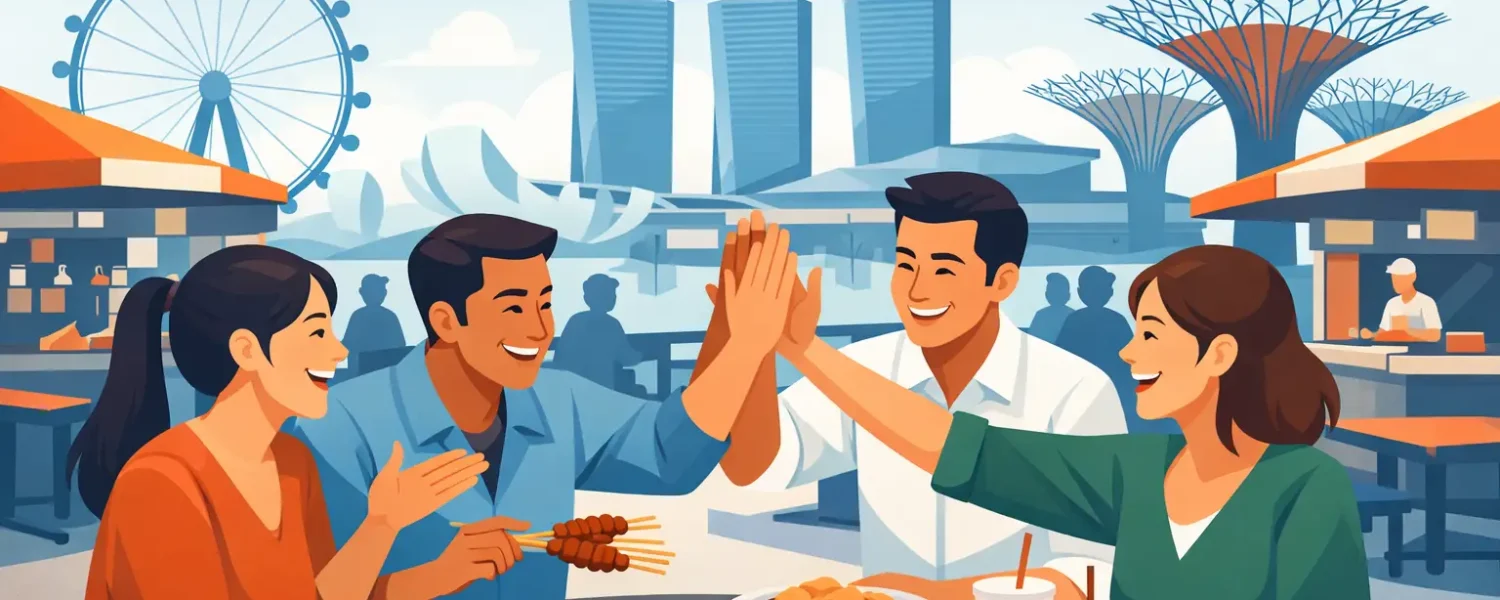
A team lunch can disappear from memory by 3 p.m. A good hawker team building Singapore experience does the opposite – it gives people something to talk about on the way back to the office, in the next meeting, and sometimes weeks later when someone says, remember that satay stop or that debate over the best laksa.
That is the real charm of bringing a team into Singapore’s hawker culture. You are not forcing fun in a meeting room. You are giving people a setting that already feels lively, familiar, and full of stories. The food does part of the work. The atmosphere does the rest.
Why hawker team building in Singapore works
Hawker culture has a natural advantage over many standard team activities. It is relaxed, social, and built around shared experience. People who do not usually speak much at work often open up over food. A colleague who stays quiet in workshops might suddenly become the expert on prata, chicken rice, or the right amount of sambal.
That matters because team building works best when it feels human first and corporate second. Hawker experiences strip away some of the formal office energy. People walk, taste, compare, laugh, and learn without feeling put on the spot.
There is also a stronger cultural layer here. In Singapore, hawker food is not just convenient and delicious. It carries migration stories, family traditions, neighborhood identity, and a very local sense of pride. When a team experiences that together, especially if it includes overseas guests or regional colleagues, the activity becomes more than a meal. It becomes a shared introduction to the country through something people can taste, smell, and talk about right away.
What makes a hawker team building Singapore event memorable
Not every food outing becomes a good team event. If the group simply shows up, splits into cliques, and orders whatever is nearby, the result can feel more like a loose lunch than an intentional experience.
The difference is structure.
A strong hawker team building format usually combines three things: guided discovery, room for interaction, and just enough storytelling to make the food meaningful. People should have a reason to move beyond their usual circles. They should taste dishes they might not order on their own. And they should leave knowing why a plate of nasi lemak or a stick of satay says something about Singapore’s history.
That is where curation really matters. A well-planned experience helps teams avoid the common problem of too much choice and too little context. Hawker centers are wonderful because they are full of variety, but that same variety can overwhelm visitors and even locals who want a smooth group activity. A guided format turns abundance into a journey.
Food creates easy conversation
The beauty of hawker-based activities is that nobody needs special skills. No one has to sing, pitch, solve puzzles under pressure, or pretend to enjoy a trust fall. People just need curiosity and an appetite.
Food also levels the room. Senior leaders, new hires, clients, and overseas delegates can all join in naturally. Conversations move easily from favorite dishes to family background to travel stories. Those exchanges often feel more genuine than what comes out of a formal icebreaker.
Heritage gives the activity depth
A plate of char kway teow is tasty on its own. Add the story of how dishes evolved through trade, migration, and neighborhood communities, and the team starts seeing the meal differently. That extra layer is what makes a hawker experience feel distinctly Singaporean rather than just another group dining event.
For companies hosting international visitors, this matters even more. It offers a grounded way to showcase local culture without feeling staged. For local teams, it can feel surprisingly fresh too. Familiar food often becomes more meaningful when someone takes the time to connect the dots.
Choosing the right format for your team
The best format depends on who is attending and what you want the session to achieve. A leadership group, a sales team, and an international delegation may all enjoy hawker culture, but they will not always need the same pace or level of interaction.
A tasting trail works well for mixed groups because it keeps the energy moving. People go from one dish to another, compare flavors, and stay engaged through variety. This is especially useful for visitors who want to try several iconic foods in one session.
A heritage-led workshop suits teams that want more cultural insight. Here, the food is still central, but the storytelling carries more weight. This format is a strong fit for delegates, corporate hosts, and companies that want an experience with educational value, not just entertainment.
A challenge-based format can work for highly social teams, especially if you want a playful edge. But there is a trade-off. Too much competition can pull attention away from the food and stories. If your group includes senior guests, families, or people who are not excited by games, a more guided and relaxed approach usually lands better.
What to consider before booking
The first question is not budget. It is group fit.
Think about dietary needs, walking comfort, group size, and how international your audience is. A team full of local food lovers may enjoy stronger flavors and fewer explanations. A group of first-time visitors may need more guidance around what they are eating and how each dish fits into Singapore’s multicultural food story.
Timing matters too. A lunch session can feel efficient and upbeat, while an evening session often feels more atmospheric and social. If your goal is connection after a conference day, evening usually wins. If you need a compact activity between meetings, lunch may be the smarter choice.
Weather and logistics should not be ignored either. Hawker experiences are lively because they happen in real food spaces, not controlled corporate venues. That is part of the appeal. But it also means planning for comfort, pacing, and clear coordination, especially for larger groups.
Why curated beats DIY for corporate groups
Some teams try to organize their own hawker outing. That can work for a few friends. For a corporate event, it often becomes messy.
People arrive at different times. Orders get split awkwardly. The group gravitates to familiar choices. Nobody knows how to guide the cultural piece. The host ends up managing logistics instead of enjoying the event.
A curated experience removes that friction. It keeps the team moving together, introduces iconic dishes with intention, and gives the outing a proper rhythm. More importantly, it protects the fun. Guests can focus on tasting, chatting, and soaking up the atmosphere instead of figuring out where to sit or what to order for twenty people.
This is where an experience-led brand like J.I.A.K 99 fits naturally. When hawker food is paired with storytelling and thoughtful hosting, the result feels less like event planning and more like being welcomed into a very Singaporean way of gathering.
The dishes people remember
Certain foods naturally shine in team settings because they are easy to share and instantly recognizable. Satay is one. It arrives with smoke, aroma, and a built-in ritual of dipping and comparing. Laksa tends to spark conversation because everyone has an opinion on richness, spice, and style. Chicken rice looks simple until people start debating what makes it great. Then there is cendol, which often lands perfectly at the end – cold, sweet, and a little nostalgic.
The point is not to cram in as many dishes as possible. More is not always better. A smaller set of well-chosen tastings with strong storytelling usually creates a better memory than a rushed feast.
Who gets the most from this kind of event
Hawker team building is especially strong for companies that want something welcoming rather than high-pressure. It suits onboarding groups, client hosting, cross-cultural teams, and conference delegates very well. It also works for local teams that have done the usual dinners and want something with more personality.
That said, it may not be ideal for every objective. If you need a highly structured leadership simulation or a workshop tied to technical learning outcomes, food-based team building may be better as a complement than the main event. The strongest results come when the goal is connection, cultural immersion, morale, and memorable hosting.
A good team event should feel easy to join and hard to forget. Hawker culture does that beautifully because it brings people together around something joyful, rooted, and unmistakably local. If you want your group to leave with full bellies, better conversation, and a real taste of place, come jiak with open minds and let the stories travel with you.