
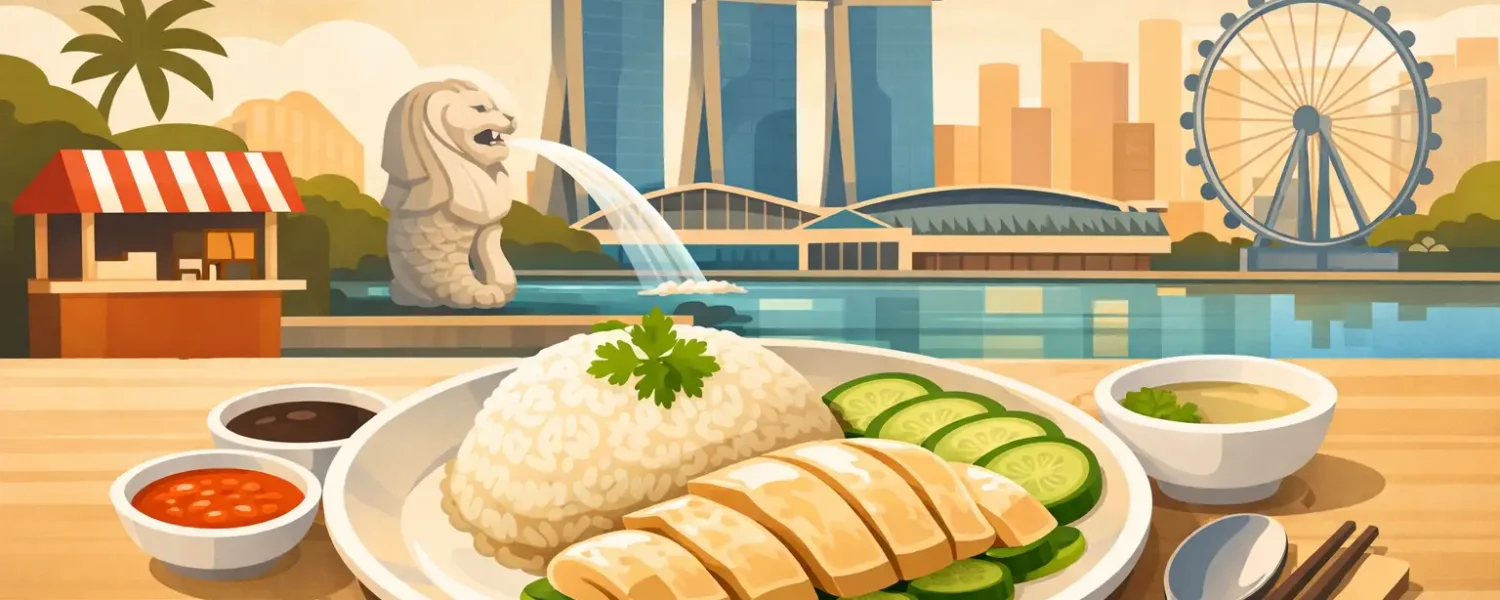
The first clue that you’re chasing the best chicken rice experience Singapore can offer is the line. Not every long queue means greatness, of course, but when you see office workers, aunties, tourists, and taxi drivers all waiting for the same stall before lunch, pay attention. Chicken rice in Singapore is never just chicken and rice. It is routine, pride, memory, debate, and comfort served on one plate.
For many visitors, chicken rice looks simple enough to understand in a glance. Poached or roasted chicken, glossy rice, chili, ginger, dark soy. Done, right? Not quite. The real pleasure is in the balance. The chicken should be tender without turning limp. The rice should carry deep flavor from stock, garlic, ginger, and fat, but still feel light enough that you want another spoonful. The chili should wake everything up, not bully the plate. When all of that lands together, you stop eating mechanically and start paying attention.
What makes the best chicken rice experience in Singapore
A great plate matters, but the best chicken rice experience in Singapore goes beyond technique. It includes the setting, the rhythm of the hawker center, the smell of stock simmering nearby, the clipped efficiency of a seasoned stallholder, and the little rituals that locals barely think about anymore. Ordering your preferred cut. Deciding whether roasted or white chicken suits your mood. Mixing your own ratio of chili and ginger. Reaching for soup between bites. These details turn a famous dish into a lived cultural moment.
This is also why chicken rice can feel surprisingly personal. Some people want silky white chicken with clean, delicate flavor. Others want roasted chicken with deeper savoriness and caramelized skin. Some judge the meal by the fragrance of the rice first. Others care most about the chili. There is no single perfect version for everyone, which is exactly what makes the search fun.
It starts with the chicken, but it does not end there
If you only focus on the bird, you miss half the story. Good chicken rice depends on discipline across every component. The poaching has to be controlled so the flesh stays smooth and juicy. The rice must be cooked in rich stock, not treated like an afterthought. The sauces need punch and freshness. Even the cucumber has a job to do, offering a cool, clean contrast to the richness.
Then there is texture, one of the biggest differences between an average plate and a memorable one. Great chicken rice has movement. Soft chicken, fluffy but structured rice, sharp chili, a little crunch from cucumber, a slick touch of soy. It feels composed, not random.
Why chicken rice tells a bigger Singapore story
Chicken rice has roots in migration and adaptation, and that is part of its charm. What many people now think of as a national classic was shaped over time through Hainanese culinary influence, local tastes, and hawker ingenuity. In Singapore, food rarely sits in one neat cultural box. Dishes evolve as communities meet, trade ideas, and cook for one another.
That is why eating chicken rice at a hawker center feels so distinct from eating it in a generic dining room. You are not just sampling a recipe. You are stepping into a food culture built by generations of vendors, workers, families, and regulars who keep these flavors alive every day. The dish carries efficiency and care in equal measure. It is fast food in the best sense – skilled, honest, and rooted in place.
For travelers, this context changes the meal. For locals, it often renews appreciation for something so familiar it can be easy to overlook. A really good chicken rice stop reminds you that everyday food can still carry heritage with every bite.
Hawker centers are part of the experience
If you want the best chicken rice experience Singapore visitors talk about long after the trip, hawker culture matters. The sounds, the shared tables, the tray returns, the neighboring stalls selling satay, laksa, and cendol – this is part of how the meal is meant to be felt. Chicken rice is delicious on its own, but in a hawker setting it becomes part of a larger edible map of the city.
There is also a kind of honesty in hawker dining. The food has to stand on its own. No fancy lighting, no dramatic plating, no soft soundtrack doing half the work. Just flavor, repetition, and reputation built over years. That straightforwardness is one reason visitors find hawker food so memorable. You know very quickly when something is the real deal.
How to spot a truly memorable chicken rice plate
Start with the rice before you even touch the sauces. If it smells aromatic and savory on its own, you are in good hands. Bland rice is hard to forgive because it means the foundation is weak. Then look at the chicken. The skin should have a gentle sheen, and the meat should not look dried out or ragged.
After that, test the sauces one by one. Chili should be bright, spicy, and slightly tangy. Ginger sauce should taste fresh, not tired. Dark soy should add depth without making everything cloying. A strong stall understands that these are not side notes. They are part of the architecture of the dish.
Portion style matters too. Some stalls are all about clean precision, with neatly chopped pieces and a balanced plate. Others lean generous and rustic. Neither approach is automatically better. It depends on what kind of meal you want. If you are new to chicken rice, a guided tasting can help you notice these differences instead of just checking the dish off your list.
The trade-off between famous and intimate
A famous stall can be thrilling because there is social proof all around you. You know you are tasting something with a reputation. The trade-off is that long waits, rush-hour crowds, and pressure to eat quickly can flatten the moment.
A lesser-known stall may offer a calmer experience and more room to savor, but it may not deliver the same benchmark flavor that made chicken rice iconic in the first place. So yes, it depends. If you want bragging rights, go where the crowds gather. If you want a more relaxed, story-rich meal, the quieter route can be more rewarding.
For many people, the sweet spot is not choosing one over the other. It is having someone local frame the experience, explain what you are tasting, and place the dish within the wider world of hawker heritage.
The best chicken rice experience Singapore visitors remember most
The meals that stick are rarely just about the first bite. They are the ones where you learn why the rice is so fragrant, why sauce ratios matter, how this dish became such a beloved local staple, and what makes one stall different from the next. Suddenly, chicken rice stops being a tourist must-try and starts becoming something more human and specific.
That is where a curated hawker experience really shines. Instead of wandering, guessing, and hoping you ordered the right thing, you get a more connected way to taste. You hear the migration stories behind the food. You understand why hawker culture means so much here. You see chicken rice not as a standalone icon, but as part of a broader heritage table alongside satay, laksa, nasi lemak, prata, and cendol.
For culturally curious travelers, families, corporate groups, and even locals who want to reconnect with familiar flavors, this format makes a difference. It saves time, adds context, and turns a meal into a memory with texture and meaning. J.I.A.K 99 builds exactly this kind of classic hawker experience – one where the food is delicious, yes, but the stories are what make the flavors stay with you.
Come hungry, but come curious too
There is no wrong way to enjoy chicken rice if the plate is good. You can eat quickly at a hawker table and still leave happy. But if you want the best version of the experience, bring a little curiosity with your appetite.
Ask why one chili tastes sharper than another. Notice whether the rice feels rich or restrained. Compare roasted and poached styles. Look around the hawker center and see how this one dish sits inside a living, breathing food culture that locals return to again and again.
That is when chicken rice becomes more than a recommendation from a guidebook. It becomes a way to understand Singapore through something warm, fragrant, and deeply loved. And honestly, that is the kind of meal worth making time for.