
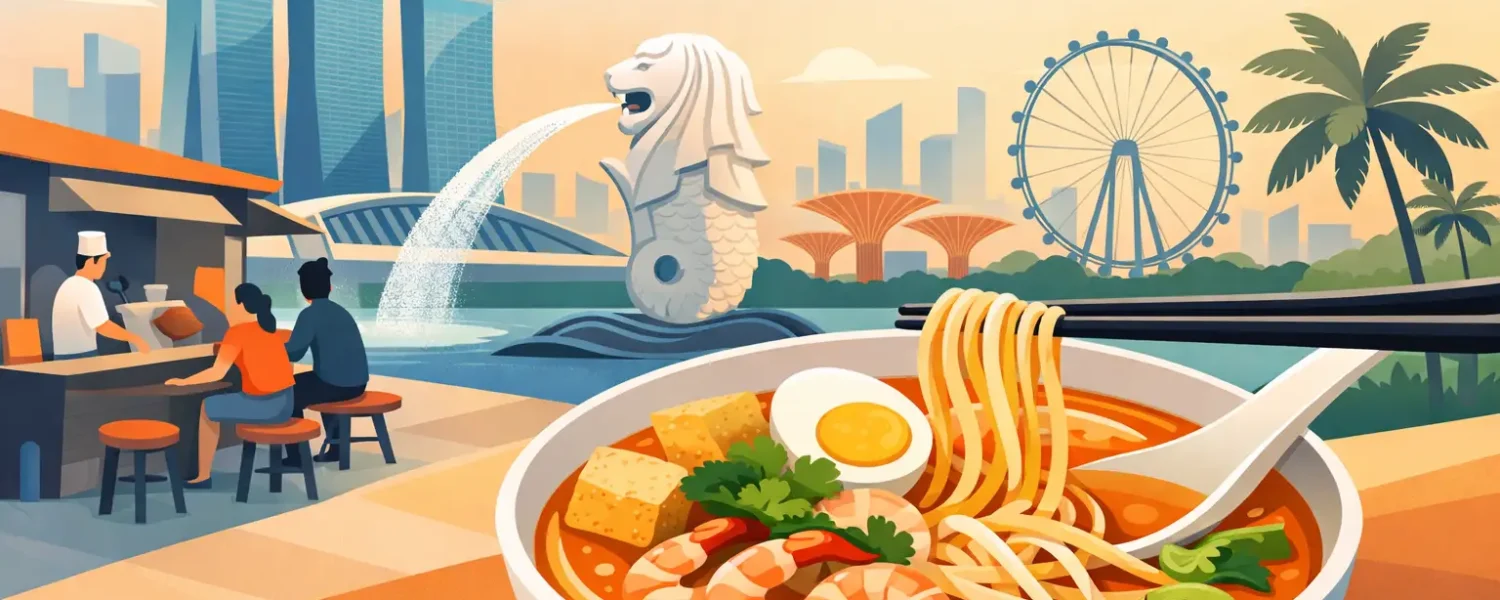
The first spoonful tells you everything. The broth should be rich but not heavy, the noodles should catch the gravy properly, and the aroma of coconut, spice, and seafood should rise before the bowl even reaches your table. If you are wondering where to try laksa in Singapore, the honest answer is not just a single stall or a neat top-10 list. Laksa is one of those dishes that carries memory, migration, and personal loyalty. Ask five locals and you may get five different answers, all defended very seriously.
That is part of the fun. Laksa in Singapore is not one fixed thing. It is a dish shaped by Peranakan influence, regional styles, hawker traditions, and the habits of the people making it every day. So if you want a bowl worth remembering, it helps to know what kind of laksa experience you are looking for before you join the queue.
Where to try laksa in Singapore if you want the classic hawker experience
For many visitors, the best place to start is a hawker center. Not because every stall is automatically great, but because hawker culture is where laksa makes the most sense. You are not just eating noodles in spicy broth. You are sitting inside a living food tradition shaped by working-class meals, family recipes, neighborhood rivalries, and generations of regulars who know exactly how their laksa should taste.
In a hawker center, you also get the right rhythm. The clatter of trays, the smell of grilled satay nearby, someone ordering kopi at the next table, and a bowl of laksa arriving hot and fast – that setting matters. It gives the dish context. For travelers and first-time visitors, it is often more memorable than trying laksa in a polished restaurant where the food may be good but the atmosphere is doing a different job.
That said, hawker stalls vary a lot. Some are known for a thicker coconut-forward broth. Others lean sharper and spicier, with more chili bite and less sweetness. Some are generous with cockles, shrimp, fish cake, or tofu puffs, while others keep the toppings simple and let the broth do the talking. If you see a queue, that can be a useful clue, but not the only one. A long line may mean famous, nostalgic, or social-media popular. It does not always mean it matches your taste.
What kind of laksa should you look for?
Before deciding where to try laksa in Singapore, it helps to understand the main style people usually mean when they say laksa here. The iconic version is curry laksa with a creamy, spicy broth made from coconut milk and a spice paste that often includes dried shrimp, chilies, turmeric, and aromatics. It is commonly served with thick rice noodles or cut laksa noodles, plus toppings such as shrimp, fish cake, cockles, and bean sprouts.
One of Singapore’s best-known local expressions is Katong-style laksa. This version is especially famous for its short-cut noodles, which make it easy to eat with just a spoon. The broth tends to be fragrant and full-bodied, often with a balanced richness that feels comforting rather than aggressive. If you want a bowl that is deeply associated with local food identity, Katong-style laksa is a strong place to begin.
But even within that category, there are trade-offs. Some bowls are milder and easier for first-timers. Some are punchier, with more dried shrimp depth or stronger sambal heat. Some feel creamy and indulgent. Others are lighter and more savory. There is no single correct version, which is why laksa conversations in Singapore can get wonderfully opinionated.
How to choose a laksa stall without overthinking it
If you are standing in front of several options and not sure what to do, trust your senses first. A good laksa stall usually announces itself through aroma. You should catch the fragrance of spice and coconut before you even read the signboard. Watch a few bowls come out. Is the broth vivid and appetizing? Do the ingredients look freshly assembled rather than tired from sitting too long? Are people finishing their bowls, not just photographing them?
Timing matters too. Go during active meal periods if you can. Laksa tastes best when the broth is being handled constantly and the stall is in full flow. Mid-morning or lunch can be better than a quiet off-peak hour when everything feels slower. If you are sensitive to spice, ask before ordering. Most stalls are happy to let you know whether their broth runs mild, medium, or fiery.
Portion size is another useful clue. A smaller bowl can actually be ideal if this is your first stop in a hawker session and you want to leave room for other dishes. That is the beauty of eating local in Singapore – laksa does not have to be the whole plan. It can be one part of a bigger food trail that includes satay, chicken rice, cendol, or prata, each dish telling a different part of the story.
What makes one bowl memorable and another just fine
The broth is the heart of it, but balance is what separates a good bowl from a forgettable one. Too much coconut and it turns flat and heavy. Too much chili and the spice drowns the aromatics. Too little depth and the laksa feels like a creamy noodle soup without character. The best bowls carry layers. First richness, then spice, then that slow savory finish from seafood, dried shrimp, or rempah.
Texture matters just as much. Noodles should not clump or go mushy. Tofu puffs should soak up broth without collapsing into nothing. Cockles, if included, should add briny character rather than feel like an afterthought. Even the spoonful-to-topping ratio matters. Laksa is not a dish that forgives laziness. When it is made with care, every bite feels complete.
This is why recommendations can be tricky. One person may love a sweeter, gentler bowl because it reminds them of childhood. Another may want sharper spice and a more assertive prawn flavor. A visitor might prefer the most approachable version first, while a local might chase the most old-school expression they can find. Taste is personal, and laksa is deeply tied to memory.
The heritage behind the bowl
Laksa is delicious on its own, of course, but it becomes even more meaningful when you understand where it comes from. The dish reflects the meeting of cultures – Malay, Chinese, Peranakan, and regional influences across Southeast Asia. In Singapore, that blended heritage is not abstract. It lives in the food people eat every day, in family recipes passed down, and in hawker stalls that preserve flavor through repetition and pride.
That is why laksa works so well as an introduction to local food culture. It is approachable, satisfying, and full of story. For travelers, it offers more than just a famous dish to tick off. For locals, it can be a powerful way to reconnect with neighborhood identity and shared memory. A bowl of laksa is not only about what is in the soup. It is also about who made it, where the recipe traveled from, and why it still matters.
If you want that broader experience rather than just a single meal, a curated food journey can help connect the dots. Brands like J.I.A.K 99 build that bridge well by pairing iconic hawker dishes with storytelling, cultural background, and the fun of eating them in context. For many visitors, that makes the flavors stick in memory much longer.
Best time and mood for trying laksa
Laksa is usually best when you are hungry enough to appreciate its richness and not rushing to your next stop. It is not really a grab-and-go snack. Give it a bit of time. Sit down. Let the bowl settle in front of you. Taste the broth first before mixing in extra sambal or condiments.
Rainy weather helps, if we are being honest. A hot, spicy bowl on a damp afternoon feels almost unfairly satisfying. But laksa also works brilliantly as a lunch that anchors a full day of sightseeing. If you are introducing someone to Singapore through food, it is one of the dishes that sparks conversation fast. People notice the aroma, the color, the spoon-only noodles, the mix of heat and creaminess. It is a dish with personality.
The only real mistake is chasing a famous bowl so hard that you miss the experience around it. Some of the best laksa moments come from a humble tray, a busy hawker table, and a recipe someone has been repeating for years with steady hands and no drama.
So where should you try laksa in Singapore? Start where the culture still breathes through the bowl – in a hawker setting, with an open mind, a little curiosity, and enough appetite to let one spoonful lead to the next. That is usually where the good stories begin.