
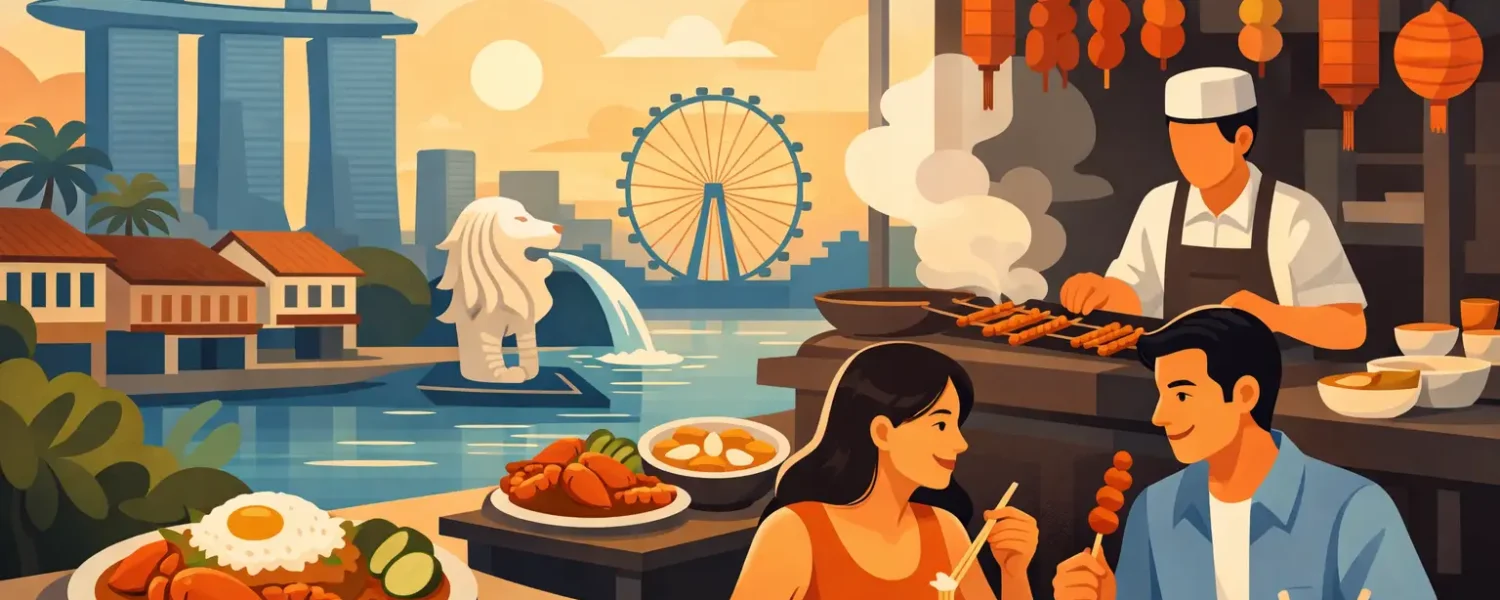
You can eat a great plate of chicken rice almost anywhere in Singapore. The harder part is understanding why that plate matters, who shaped it, and how one meal can hold pieces of migration, memory, and daily life. That is the difference when you book Singapore food experience options that are built around hawker culture rather than just restaurant hopping.
For many visitors, local food looks easy at first glance – order satay, try laksa, maybe finish with cendol, take a few photos, done. But hawker food is not just a checklist of famous dishes. It is one of the clearest ways to experience the country’s multicultural roots, from Malay and Chinese influences to Indian flavors and Peranakan touches. A guided food experience turns that first bite into something fuller, warmer, and much more memorable.
Why book Singapore food experience options instead of eating solo?
If you are short on time, going on your own can absolutely work. Singapore is friendly for independent travelers, and good food is everywhere. But there is a trade-off. When you explore alone, you often get the dish without the backstory, the flavor without the context, and the hawker center without knowing what to order or where to begin.
A curated experience removes that friction. You are not standing in front of ten stalls wondering whether to choose the long queue or the quiet one. You are guided through dishes with a clear narrative, so each stop builds on the last. Satay becomes more than grilled skewers. Laksa becomes more than a rich noodle soup. Nasi lemak becomes more than rice on a plate. Suddenly, you are tasting how communities, trade routes, and everyday habits helped shape modern Singapore.
That matters for travelers, but it matters for locals too. Plenty of Singaporeans grow up eating hawker food regularly yet still enjoy a structured experience because it reframes familiar dishes through heritage and storytelling. It feels less like a meal and more like seeing your own food culture with fresh eyes.
What a good hawker experience should actually include
Not every food tour delivers the same thing. Some are all speed and quantity – lots of bites, very little meaning. Others lean so heavily into history that the fun gets lost. The best experiences find the sweet spot between delicious, informative, and easy to enjoy.
A strong hawker experience should feel guided, but never stiff. You want someone who can explain what makes Hainanese chicken rice distinct, why prata has such a strong place in local supper culture, or how cendol became a beloved cool-down in the tropical heat. At the same time, the experience should still feel lively, social, and full of appetite.
Food selection matters too. A well-curated route usually includes a mix of savory, spicy, rich, and sweet dishes so your palate does not get fatigued halfway through. If every stop is heavy, you leave stuffed but not necessarily delighted. If the curation is thoughtful, each dish plays a role in the bigger story.
There is also a practical side. The best bookable food experiences make local cuisine approachable for first-time visitors. That means clear pacing, simple explanations, and enough confidence-building that guests feel comfortable trying unfamiliar flavors. You should leave with more curiosity than hesitation.
The dishes people hope to try – and why they stay with you
There is a reason certain hawker dishes show up again and again in Singapore food experiences. They are crowd-pleasers, yes, but they are also cultural anchors.
Satay is often one of the easiest entry points. Smoky, slightly sweet, and served with peanut sauce, it is deeply social food. It invites sharing, conversation, and that first relaxed moment when everyone starts saying, okay, now we are really eating local.
Laksa brings another side of the story. It is rich, aromatic, and layered, with spice and coconut working together in a way that feels comforting and bold at once. For many visitors, it is the dish that makes them realize Singaporean food is not one-note. It can be complex without being intimidating.
Nasi lemak shows how everyday food can still carry strong identity. Fragrant rice, sambal, crunchy anchovies, peanuts, cucumber, and accompaniments come together in a way that feels balanced and deeply satisfying. Chicken rice does something similar through simplicity. When it is done well, every detail matters – the rice, the broth, the sauce, the tenderness of the chicken.
Then there is prata, with its stretch, crispness, and comfort factor, and cendol, which lands like sweet relief in the heat. These dishes are not just famous because they taste good. They have staying power because they connect people across generations, routines, and neighborhoods.
Who should book a Singapore food experience?
The obvious answer is tourists, especially first-time visitors who want something more grounded than a generic city tour. A food experience is one of the fastest ways to get a feel for the place because it combines flavor, history, and everyday life in one setting.
But the audience is wider than that. Families often love this format because it is interactive without being overly formal. There is enough variety for different tastes, and the storytelling helps younger guests stay engaged. Delegates and business travelers also tend to appreciate it because it turns a free evening or lunch into something distinctly local rather than just another meal between meetings.
Corporate groups are a particularly strong fit. A hawker-based experience works well for team building because food lowers barriers quickly. People talk more easily over shared dishes. They compare preferences, swap reactions, and build memories without the awkwardness that can come with more forced activities. If the experience includes hands-on elements or cultural storytelling, it becomes even more useful as a hosted event for clients or international colleagues.
Locals are sometimes the most surprised by how much they enjoy it. When familiar food is presented with care, sensory detail, and heritage context, it becomes a reminder that everyday eating can still feel special.
How to choose the right book Singapore food experience
The right choice depends on what you want out of it. If your priority is tasting as much as possible, look for breadth. If your priority is cultural insight, choose an experience that clearly emphasizes storytelling and heritage. If you are booking for a group, convenience and pacing may matter more than covering every famous dish.
It also helps to think about your guests. A corporate host may want something polished, dependable, and easy to follow for international visitors. A couple on vacation may care more about atmosphere and shareable moments. A local family might want an experience that feels fresh without being touristy.
Look for signs of thoughtful curation. Are the dishes iconic for a reason, or just popular? Is there a clear theme? Does the experience help guests understand hawker culture, not just consume it? These details shape whether the outing feels meaningful or forgettable.
One more thing: do not confuse authenticity with discomfort. A good food experience can be approachable and well-organized while still feeling proudly local. In fact, that balance is often what makes people relax enough to enjoy the food fully.
More than a meal, less than a lecture
The best hawker experiences sit in a very sweet middle ground. They are not dry history lessons, and they are not random tasting sessions either. They give you enough story to deepen the meal, enough sensory fun to keep things lively, and enough structure that you can simply show up ready to jiak.
That is what makes a heritage-led experience stand out. It respects hawker food as something worth celebrating, not just consuming quickly between attractions. For a brand like J.I.A.K 99, that means treating iconic dishes as living pieces of culture – full of character, memory, and local pride.
When you book well, you do not just leave full. You leave with a sharper sense of place, a few favorite flavors you will think about long after the trip, and a better answer to the question, what does Singapore actually taste like?
If you are deciding whether to make time for it, here is the simple answer: meals fill your stomach, but the right food experience gives you a story worth bringing home.